
The best wood decking alternatives for Wisconsin homeowners are mineral-based composite, capped composite, uncapped composite, PVC, aluminum, engineered decking, and concrete. Some homeowners prefer non-wood decking because wood can struggle in the Wisconsin climate.
Wood decks have a timeless appeal, but the freeze-thaw cycles, heavy snowfall, humid summers, and sub-zero January nights that define life in Madison, Sun Prairie, and the surrounding region put them through a punishing cycle every single year. Even well-maintained wood decks can demand significant ongoing effort — and still deteriorate faster than they would in milder climates.
Speak with our deck builders in Madison, WI to find the right material for your home.

Why Wisconsin’s climate is hard on wood decks
Wisconsin’s weather creates a uniquely demanding environment for any outdoor structure. According to the Wisconsin State Climatology Office, Madison averages 51.8 inches of snow per year based on the 1991–2020 climate normals, and that snowfall arrives alongside temperatures that regularly drop well below zero in January and climb into the upper 80s in July.
That temperature range creates repeated freeze-thaw cycles, one of the most destructive forces on wood decking. When moisture works its way into wood grain and then freezes, it expands. Over time, this causes boards to crack, splinter, warp, and eventually rot from the inside out.
Add in spring’s heavy moisture, summer humidity, and the UV exposure of long bright days, and it becomes clear why wood decks in this region typically require staining or sealing every two to three years — and full replacement sooner than most homeowners expect.
What to look for in a Wisconsin-ready deck material
Before comparing materials, it helps to know what to prioritize. Not every performance factor carries equal weight in our climate.
When we evaluate non-wood decking options for Wisconsin homes, these factors matter most:
- Freeze-thaw resistance: Can the material absorb and release moisture without cracking, warping, or delaminating across repeated cold-to-warm cycles?
- Structural stability: Does the material maintain its shape and integrity under heavy snow loads without bowing or sagging?
- Moisture resistance: How well does the surface repel water during spring thaws, rain events, and high-humidity summers?
- Maintenance demands: What does the material realistically require year to year, and how does that add up over a decade?
- Surface safety: Does the material remain slip-resistant when wet, icy, or covered in early-morning frost?
- Long-term cost: What is the true cost when upkeep, repairs, and eventual replacement are factored in alongside the upfront price?
| Factor | Why it matters in Wisconsin |
| Freeze-thaw resistance | Repeated seasonal cycling causes cracking and warping in vulnerable materials |
| Snow load tolerance | Decks must handle significant weight accumulation without structural compromise |
| Moisture resistance | Spring snowmelt and humid summers create prolonged moisture exposure |
| Slip resistance | Frost, ice, and wet surfaces are a safety concern for much of the year |
| Maintenance cycle | Short Wisconsin summers make time-intensive upkeep impractical for most homeowners |
We walk every homeowner through these factors before recommending a material — because the right answer depends on your specific site, exposure level, and budget.
Additional reading: What is the best decking material
Not sure which factors matter most for your home? Contact us, and we’ll walk you through it.
Your 7 alternatives to wood decking
1. Mineral-based composite decking
Mineral-based composite is one of the most well-rounded wood decking alternatives for Wisconsin homeowners. Made from a blend of recycled plastics, natural minerals, and wood fibers, it delivers strong freeze-thaw performance, excellent moisture resistance, and very low annual maintenance — without the upfront cost of premium options like PVC or aluminum.
The mineral composition gives these boards greater dimensional stability than standard composites, meaning they expand and contract less dramatically with Wisconsin’s wide temperature swings. These boards typically mimic the appearance of natural wood with realistic grain textures and a range of color options.
Best suited for: Homeowners prioritizing durability and low maintenance at a mid-range starting price point.
Watch out for: Surface heat retention can be noticeable in direct summer sun, and some color fading is possible with prolonged UV exposure over many years.
If a mineral-based composite looks like the right fit, our team can help identify which products are best rated for Wisconsin’s climate conditions and walk you through what installation involves for your specific site.
2. Capped composite decking
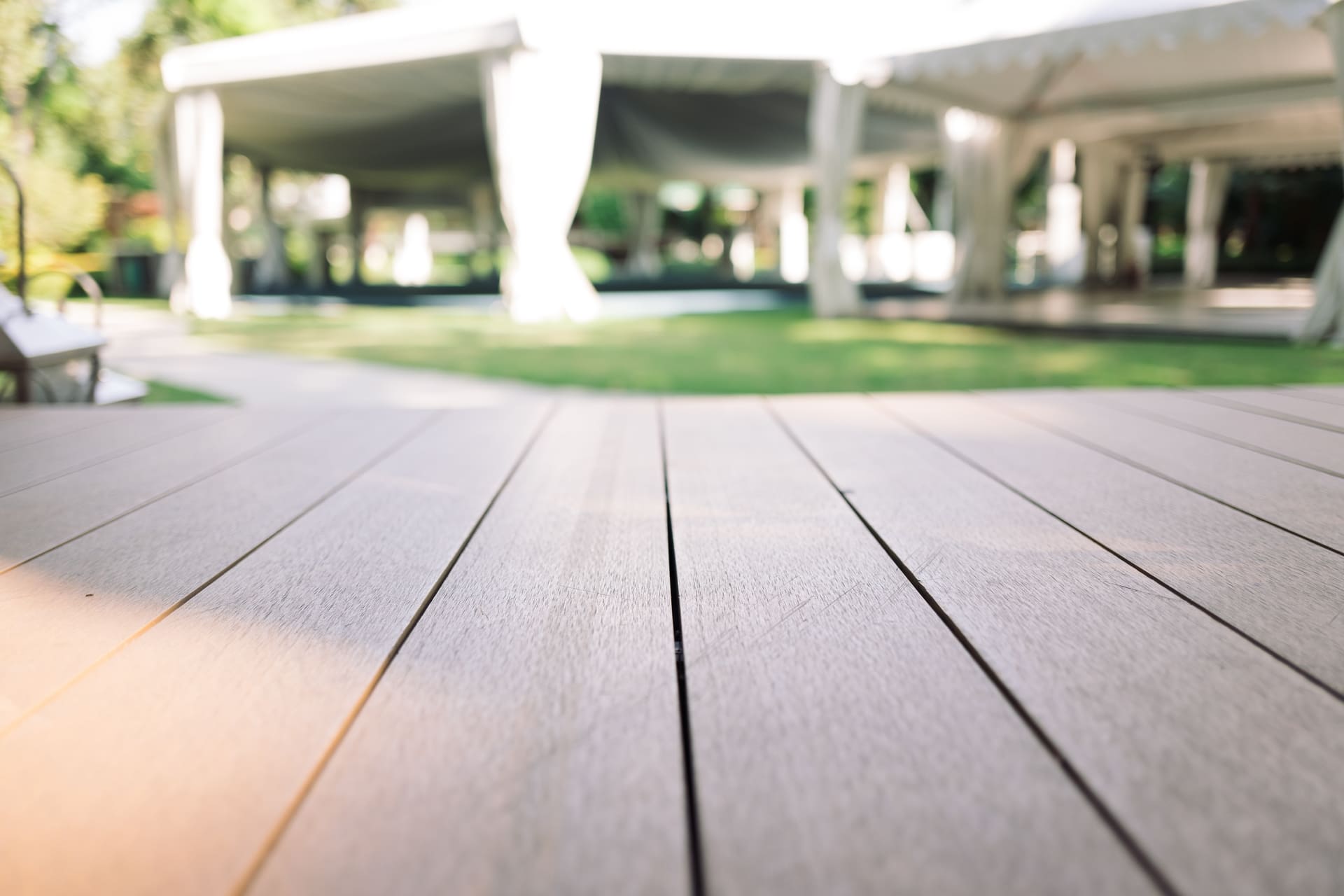
Capped composite builds on the standard composite formula by adding a protective outer shell — the “cap” — that wraps the board on all exposed sides. It acts as a barrier against moisture absorption, surface staining, UV fading, and everyday scratches, giving the board a meaningfully longer performance life than uncapped alternatives.
For Wisconsin homes, the cap’s moisture barrier is particularly valuable. During spring snowmelt, deck surfaces sit in prolonged contact with standing water and wet debris. Uncapped boards absorb that moisture over time; capped boards largely shed it — and that difference shows up in the board’s appearance and structural integrity over a Wisconsin deck’s lifespan.
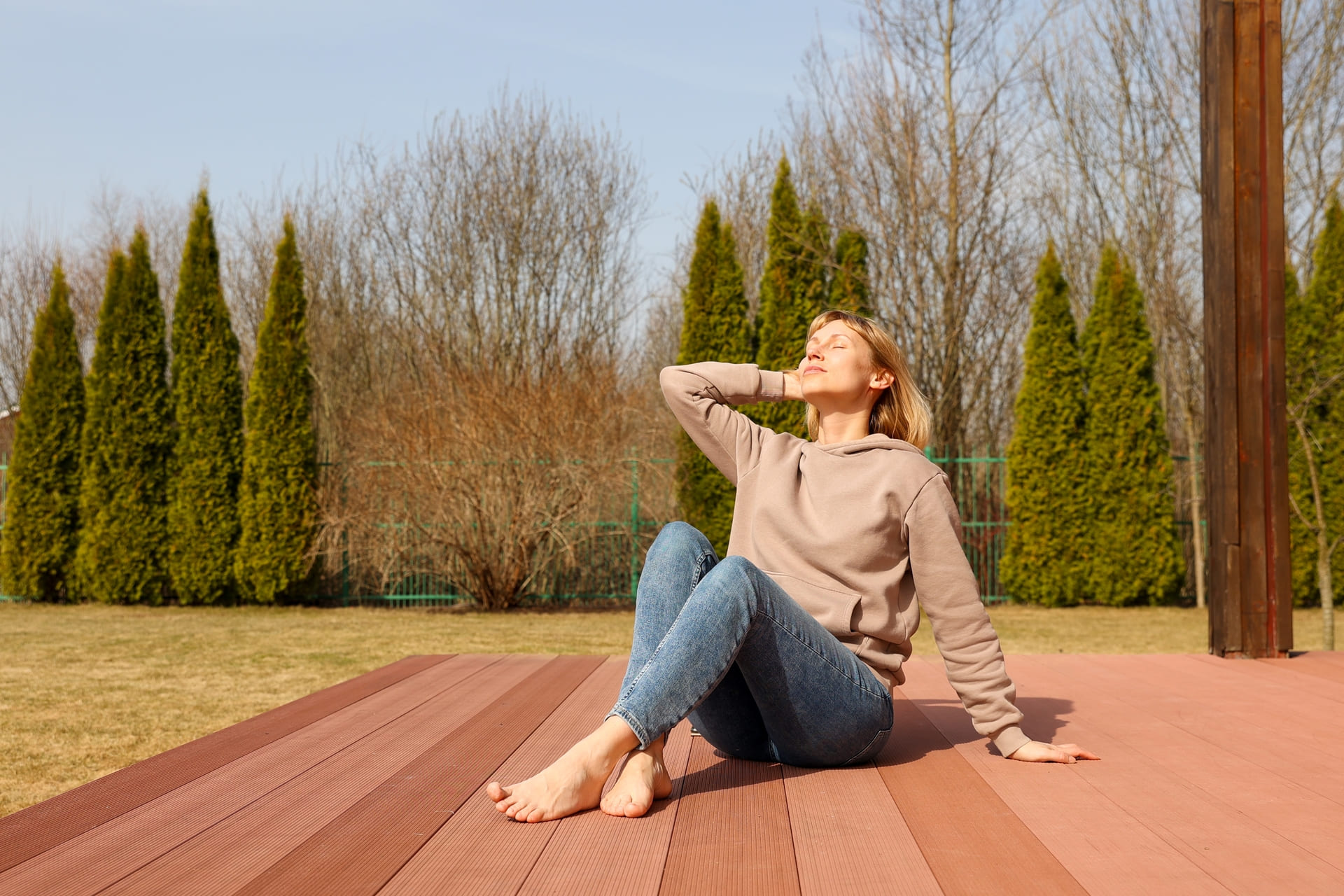
Capped composite is one of the more expensive composite options, but the reduced maintenance demands and extended lifespan make it a strong long-term value. It is available in a wide range of wood-grain patterns and colors, and most leading brands back it with warranties that reflect its durability.
Best suited for: Homeowners wanting premium composite performance with minimal long-term maintenance and a realistic wood appearance.
Watch out for: Higher upfront cost than uncapped or mineral-based composite. The protective cap limits recyclability at the end of the board’s life.
We carry multiple capped composite product lines and can help you compare warranty terms, cold-weather performance ratings, and color options to find the right fit.
3. Uncapped composite decking
Uncapped composite shares the same core construction as capped composite — recycled plastics and wood fibers — but without the protective outer shell. That difference makes it a more budget-accessible entry point into composite decking, though it comes with trade-offs that matter more in Wisconsin’s climate than they would in milder regions.
Without the cap, the board’s core is more exposed to moisture absorption, surface staining, and the long-term effects of UV exposure. For a covered or partially sheltered deck installation, uncapped composite can perform reasonably well. For a fully exposed deck surface in a Wisconsin climate, the lack of moisture protection becomes a real concern over time.
Best suited for: Budget-conscious homeowners with covered or sheltered deck installations where moisture exposure is limited.
Watch out for: More vulnerable to mold, mildew, staining, and long-term moisture damage than capped alternatives. Less ideal for fully exposed Wisconsin decks.
If you are weighing uncapped composite against other options for your budget, we can help you map out the realistic long-term cost difference — including what maintenance and early replacement could add up to over time.
Additional reading: PVC vs composite decking
4. PVC decking
PVC (polyvinyl chloride) decking is made entirely from synthetic plastic — no wood fibers. That composition makes it one of the most moisture-resistant decking materials available. There is no organic material in the board to absorb water, support mold growth, or break down under repeated wet-dry cycling.
For Wisconsin homeowners dealing with spring snowmelt, summer humidity, and frequent rain events, PVC’s resistance to moisture is a genuine advantage. It requires no staining, sealing, or painting. Cleaning with soap and water is typically all the maintenance it needs season to season.Best suited for: Homeowners prioritizing maximum moisture resistance and near-zero maintenance, with a longer-term budget to match.
Watch out for: Higher surface heat retention in summer sun compared to wood or composite. Some product lines are more convincing in wood appearance than others — worth reviewing samples before committing.
Our team can source samples from multiple PVC manufacturers so you can assess the look and feel in person before making a decision.
5. Aluminum decking
Aluminum decking is a structural material, not a wood imitation. Constructed from powder-coated or anodized aluminum, it offers a sleek, contemporary aesthetic and the kind of long-term durability that outlasts most other options on this list.
Aluminum will not rot, warp, crack, splinter, or sustain insect damage. It handles freeze-thaw cycling without structural compromise, sheds moisture effectively, and resists UV fading. For elevated decks, its lightweight-to-strength ratio also reduces structural load compared to heavier materials.
Best suited for: Homeowners with a premium budget seeking maximum longevity and a contemporary aesthetic, particularly on elevated or structurally demanding deck configurations.
Watch out for: Highest upfront cost of the materials covered here. Does not replicate the look of natural wood. Surface heat retention is noticeable in direct sun on south-facing decks.
For homeowners considering aluminum, we are happy to walk through whether the investment aligns with your home’s style, structure, and long-term plans.
6. Engineered decking
Engineered decking blends wood fibers, recycled plastics, and binding agents into a composite construction designed to balance durability, aesthetics, and sustainability. It occupies similar territory to mineral-based composite — a practical, mid-range option with good all-around performance — but with more variation between brands in how it is manufactured and what it is rated to handle.
The key appeal of engineered decking is its customization range. It is available in a wide variety of colors, textures, and finishes. As with other composite materials, performance in Wisconsin’s freeze-thaw conditions varies by product, and cold-weather performance ratings matter more here than general durability claims.
Best suited for: Homeowners who want mid-range composite durability with a wider choice of colors, textures, and design finishes.
Watch out for: Product quality and cold-weather performance varies more between brands than with capped composite or PVC. Some engineered products experience fading with prolonged UV exposure.
We help homeowners cut through the brand variation in this category — comparing freeze-thaw ratings and long-term performance data so the decision is based on evidence, not marketing.
7. Concrete decking
Concrete is not a practical option for elevated deck structures due to its significant weight — it requires substantial additional structural support to safely carry. Where concrete works well is in ground-level applications: patios, poolside surfaces, and base installations beneath other decking materials.
For Wisconsin homeowners, concrete’s most important performance consideration is its susceptibility to freeze-thaw cracking. Water that penetrates surface pores freezes, expands, and over time fractures the surface from within. Properly installed concrete — with appropriate expansion joints, drainage planning, and quality sealing — can manage this effectively.
When well-executed, concrete offers exceptional design flexibility through textures, stamped patterns, and decorative finishes, with a very long lifespan and minimal upkeep beyond periodic resealing.
Best suited for: Ground-level patios, poolside areas, and base-layer installations. Not suitable for elevated deck structures.
Watch out for: Requires quality installation with freeze-thaw performance specifically in mind. Susceptible to cracking if improperly poured, drained, or maintained. Retains surface heat in direct sunlight.
For ground-level projects where concrete is a strong candidate, our team can assess your site conditions and advise on whether it is the right fit or whether a composite alternative would serve you better long-term.
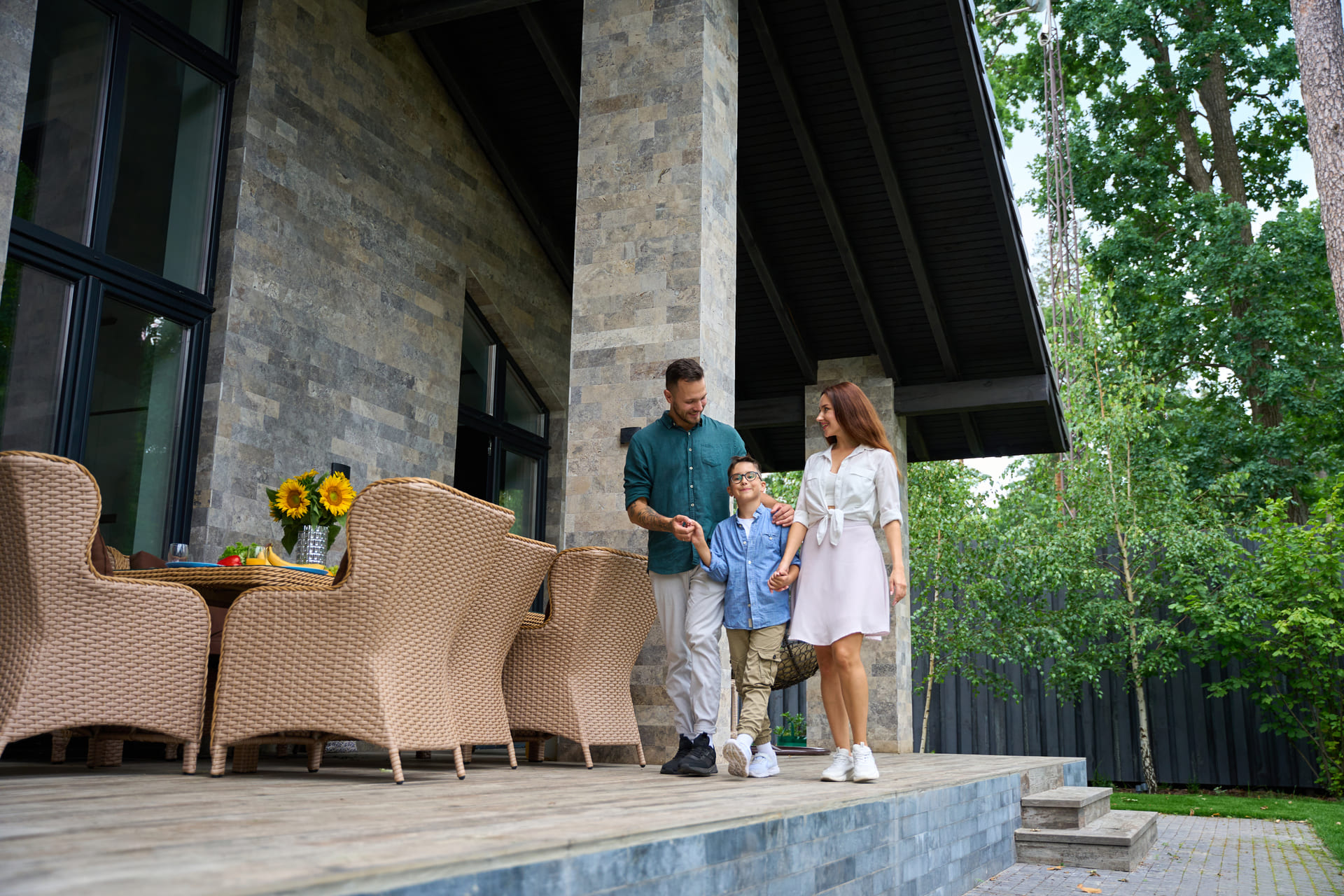
Ready to explore the options for your home? Contact us to get started.
How these seven materials compare at a glance
| Material | Maintenance level | Freeze-thaw suitability | Wood appearance | Relative cost |
| Mineral-based composite | Low | Good | Realistic | Mid-range |
| Capped composite | Very low | Very good | Highly realistic | Mid-to-high |
| Uncapped composite | Low | Moderate | Good | Budget-friendly |
| PVC | Very low | Excellent | Moderate–good | Higher |
| Aluminum | Very low | Excellent | None (contemporary) | Premium |
| Engineered | Low | Good (varies by brand) | Good | Mid-range |
| Concrete | Low–moderate | Moderate (installation-dependent) | None | Mid-to-high |
Let Prairie Exteriors take the guesswork out of your deck material decision
Choosing the right deck material involves more than comparing spec sheets. Our team at Prairie Exteriors brings the local knowledge — site conditions, seasonal performance, and installation standards specific to South-Central Wisconsin — that generic product comparisons simply cannot provide.
The 2024 Cost vs. Value Report shows that wood deck additions return around 83% of their cost at resale nationally, and low-maintenance non-wood materials are increasingly a key selling point for buyers who want outdoor living space without inheriting an upkeep burden.
With more than 60 years of combined experience serving Madison, Sun Prairie, and South-Central Wisconsin, we carry multiple manufacturers and advise homeowners across all of these options without a preference for any single product.
We only recommend materials we would install on our own homes — and we bring that same standard to every project we take on.
Call us at (608) 370-2528 or contact us to talk through your deck project with our team.
FAQs
Does replacing a wood deck with composite decking require a permit in Wisconsin?Yes, replacing or building a deck in Wisconsin typically requires a building permit, including material changes that involve structural work. Requirements vary by municipality and are handled locally. The Wisconsin Department of Safety and Professional Services oversees the Uniform Dwelling Code for residential construction statewide, and their online system lets homeowners start the permit process directly.
What time of year is best to install a new deck in Madison or Sun Prairie?Late spring — typically May through early June — is the most practical window for deck installation in South-Central Wisconsin. Ground frost must fully retreat before footings and posts are set, and consistent above-freezing temperatures help composite and PVC boards acclimate correctly during installation. Your contractor will assess site conditions, since weather varies enough each spring to shift that window earlier or later.
Can composite or PVC decking be installed over an existing wood deck frame?In some cases, yes — but only if the existing frame is structurally sound, free of rot or insect damage, and correctly spaced for the new material. Many composite and PVC products require different joist spacing than standard wood framing. A structural inspection comes first, and that assessment determines whether the existing frame can stay or needs to be replaced before new decking goes down.
How do I protect a composite or PVC deck from damage during a Wisconsin winter?Use a plastic shovel or push broom to clear snow — metal blades scratch most composite and PVC surfaces. Avoid standard rock salt and ice-melt products, as many leave residue or degrade surface finishes over time; check your manufacturer’s guidelines for approved de-icing options. A thorough rinse-down in early spring clears salt residue and winter debris before the outdoor season begins.