
Wisconsin homeowners can remove algae from a shingle roof using a diluted bleach-and-water solution or a no-rinse spray cleaner applied from a ladder.
The state’s humid summers, heavy rainfall, and shaded roof slopes create near-ideal conditions for algae to take hold, and catching it early protects both your shingles and your home’s structure.
Please note: Prairie Exteriors does not offer roof cleaning or algae removal services. This guide is provided as educational information to help Wisconsin homeowners address surface-level maintenance. Our team specializes in roofing inspections, repairs, and full replacements — and we’re happy to assess any structural concerns you may have.
Get in touch with our Wisconsin shingle roofing company for expert guidance on your roof.

How to Safely Remove Algae from Your Shingle Roof
Algae removal is manageable as a DIY project if the growth is light to moderate and you’re comfortable working safely from a ladder. For heavier moss or any mold, calling a professional is the safer and more reliable choice.
What you’ll need:
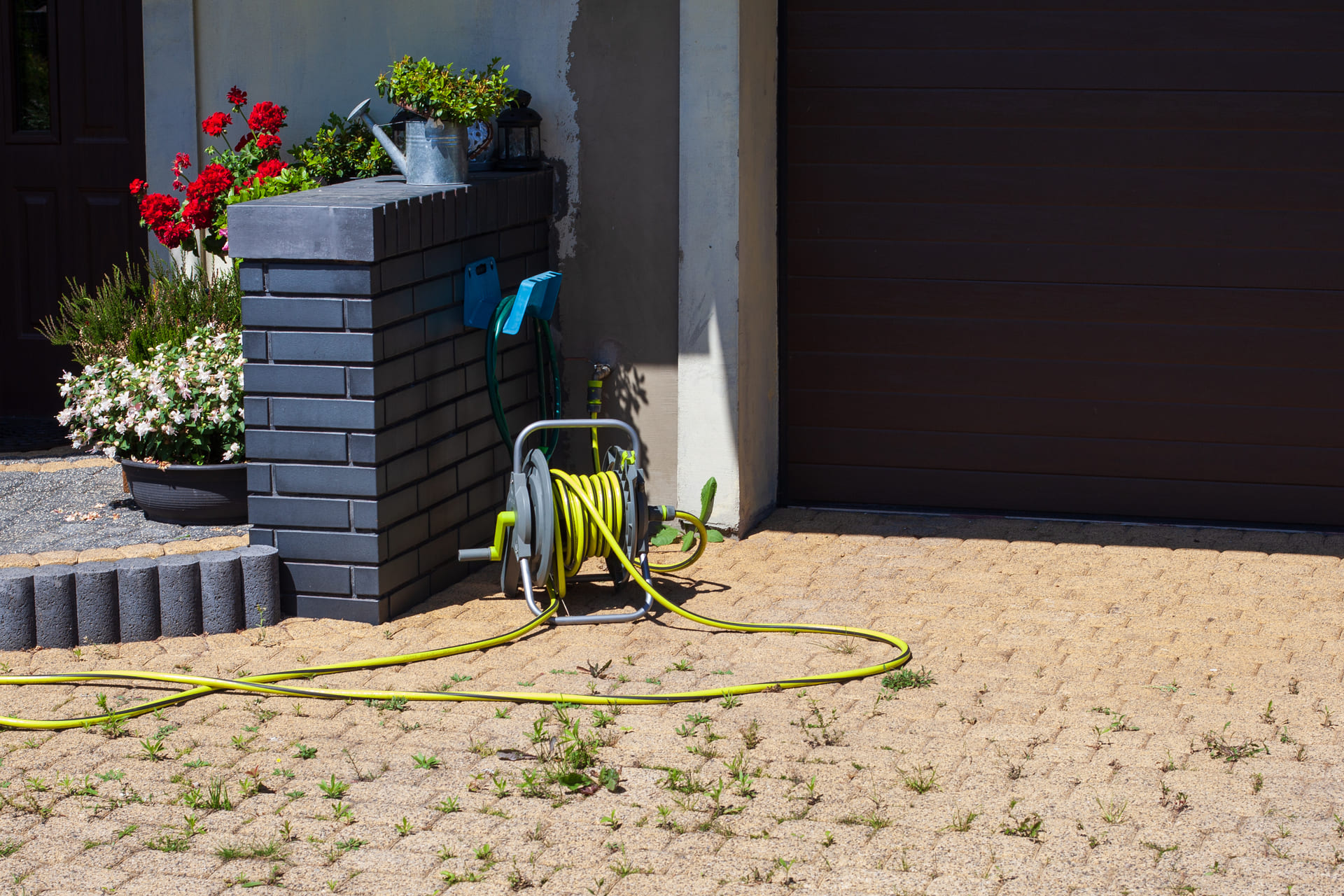
- Garden hose with a low-pressure setting
- Pump sprayer or hose-end sprayer
- Oxygen bleach cleaner
- Soft-bristle brush (for dense growth only)
- Protective covering for plants below
Step-by-step process:
- Wet down the surrounding plants and landscaping. Thoroughly rinse plantings below the roofline before applying any cleaning solution — bleach-based runoff can damage vegetation.
- Mix your cleaning solution. Combine one part oxygen bleach with one part water. For heavier buildup, a small amount of trisodium phosphate (TSP) per gallon can strengthen the mix.
- Apply from a ladder at the gutter line. You do not need to get on the roof to treat most algae. Use a pump or hose-end sprayer to apply the solution to affected areas, working from the ridge downward.
- Let it soak for 20–30 minutes. The solution needs time to break down the algae and loosen its grip on the granules.
- Rinse with low-pressure water. Use your garden hose on its lowest setting. Never use a pressure washer — the force strips granules and voids most shingle warranties.
- Give it a few days. Residual growth typically dries up and disperses within a few days of treatment.
No-Rinse Spray Products
If climbing a ladder isn’t practical, or you prefer a lower-effort approach, no-rinse spray cleaners are applied with a hose-end sprayer from ground level and require no rinsing. They work more slowly — typically over three to six months — but are safe for shingles. These are a good option for light algae or as a follow-up maintenance step after you’ve done an initial treatment.
What to Do for Dense Moss Growth
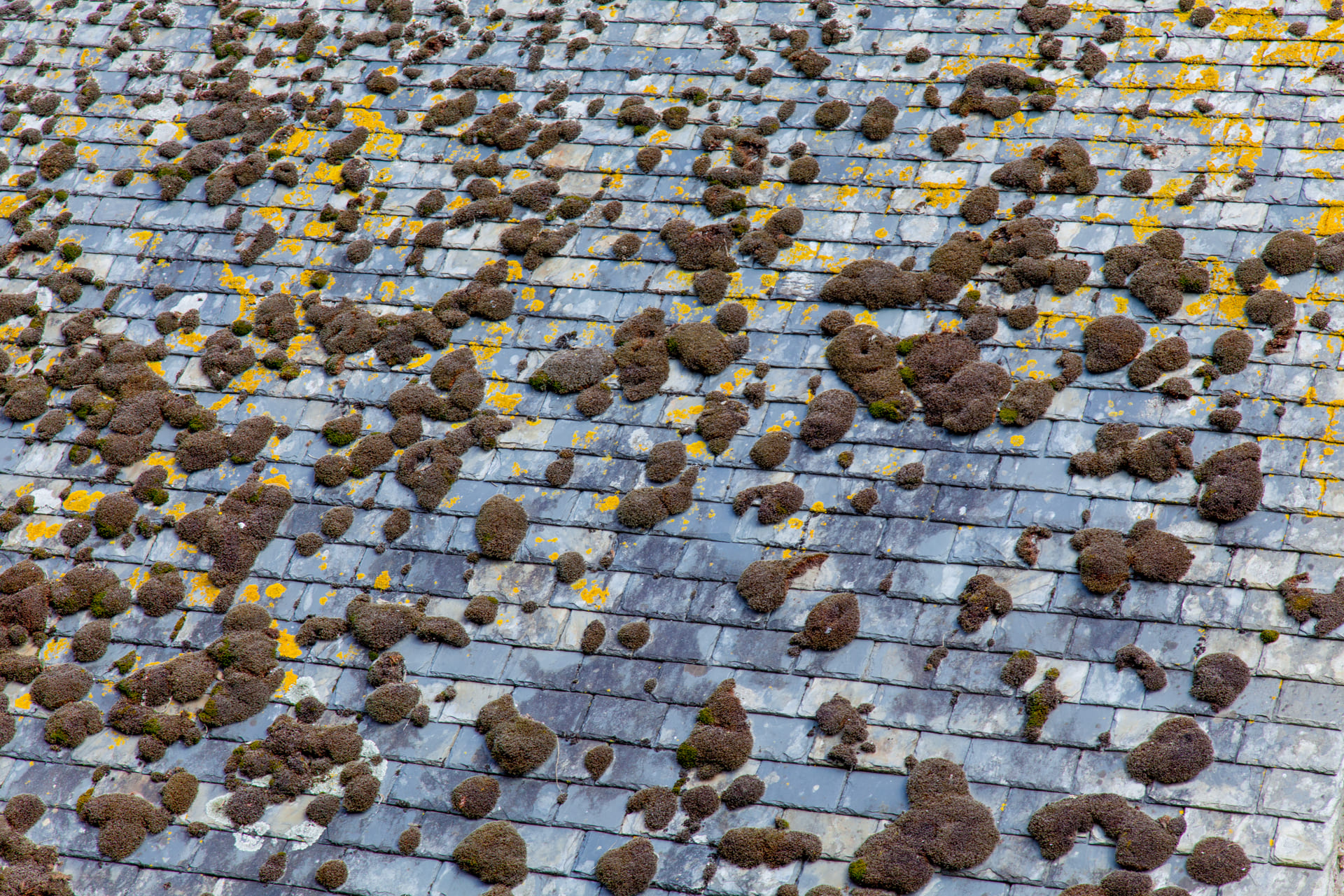
For thick moss, a soft synthetic brush can be used to gently loosen the growth before applying the solution. Always brush from the ridge downward — never against the shingle edge, which can break seal tabs. A leaf blower can help clear loosened debris afterward, again directing airflow downward from peak to gutter.
Additional reading: how to clean roof shingles
Not sure what you're looking at? Contact us, and we'll help you figure out the right next step for your roof.
The One Thing You Should Never Do: Pressure Washing
Pressure washing a shingle roof is one of the most common and costly mistakes homeowners make. The high-pressure stream blasts away the granule layer that protects shingles from UV exposure and impact.
Once those granules are gone, they don’t come back. Most major shingle manufacturers explicitly exclude pressure washing damage from their product warranties.
In Wisconsin’s climate, where shingles already work hard against ice, snow, and temperature swings, removing that protective granule layer accelerates aging dramatically and can shorten a roof’s lifespan by years. If you’re unsure whether a cleaning method is safe for your specific shingles, we’re happy to advise — though please note that cleaning and maintenance services are outside our scope. We focus on roofing inspections, repairs, and replacements.
Additional reading: pressure washing roof shingles
What Is Roof Algae and Why Does It Happen in Wisconsin?
Roof algae is a blue-green bacterium called Gloeocapsa magma that spreads through airborne spores carried by wind, birds, and small animals. Once it lands on your shingles, it feeds on the limestone filler in asphalt and thrives wherever moisture lingers.
Wisconsin’s climate creates near-ideal conditions for this — high summer humidity, spring rainfall, and north-facing roof slopes that take the longest to dry after rain or dew.
According to the Wisconsin State Climatology Office, Madison averages 37.13 inches of precipitation per year. That sustained moisture gives algae exactly what it needs to grow season after season. Homes with large overhanging trees or extensive shade on the north slope tend to see problems first and worst.
How to Tell Algae Apart from Moss and Mold
Algae, moss, and mold are often confused, but they look different, behave differently, and cause different levels of damage. Knowing what you’re dealing with matters before you treat it.
| Growth | Appearance | Flat or Upright | Primary Risk |
| Algae | Dark green to black streaks | Flat against shingles | Cosmetic; can lead to mold |
| Moss | Green, fuzzy clumps | Grows upward | Lifts shingles, traps moisture |
| Mold | Slimy, dark blotches, sometimes with odor | Upward growth | Health hazard; structural rot |
| Lichen | Crusty, gray-green patches | Flat with root-like anchors | Permanent shingle scarring |
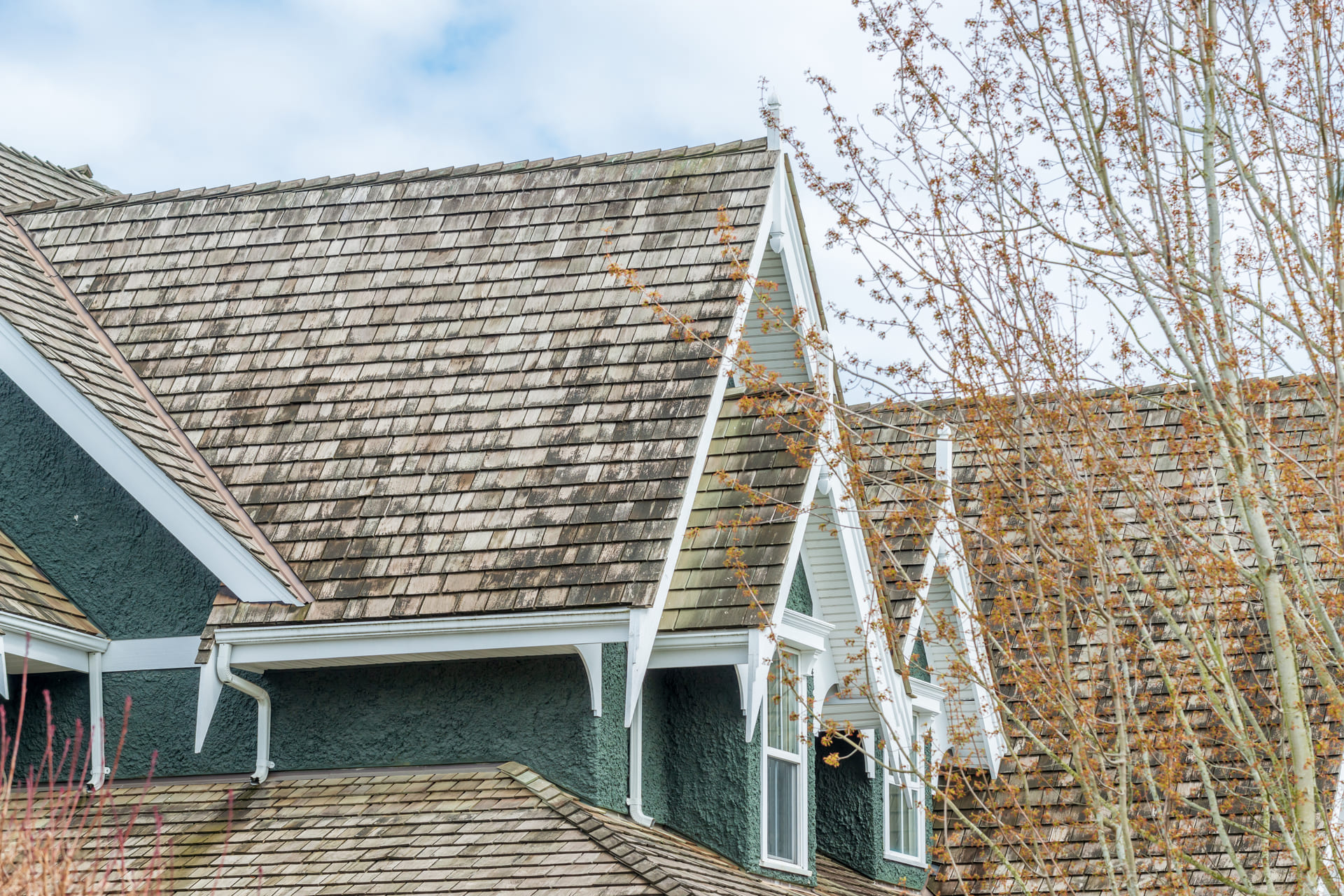
Algae is the most common cause of the dark streaks running down the roof slopes. It stays flat against the shingle surface and is mostly a cosmetic issue early on — but it accelerates shingle aging over time.
Moss looks greener and fluffier and grows up off the shingle surface. Its root-like structures work beneath shingle edges, lifting them and creating pockets where water collects. In Wisconsin, where freeze-thaw cycles are a seasonal reality, this is particularly damaging — water trapped under lifted shingles can freeze, expand, and crack or loosen the shingle.
Mold is the most serious of the three. It typically develops when algae is left untreated, and moisture becomes trapped in roofing materials.
Unlike algae, mold poses real health risks — the CDC notes that exposure can trigger respiratory symptoms, including coughing, wheezing, and severe reactions in people with asthma or allergies. We recommend calling a professional rather than attempting DIY mold removal.
How Roof Algae Damages Your Shingles Over Time
Algae might look like a surface-level stain, but the damage compounds year over year. Here’s what homeowners risk by leaving it untreated:
- Granule loss. Algae holds moisture against the shingle surface, accelerating the breakdown of the protective granule layer. Once granules are gone, UV degradation speeds up significantly.
- Shingle brittleness. Sustained moisture from algae growth causes shingles to age unevenly and become more prone to cracking — a concern made worse by Wisconsin’s freeze-thaw cycles.
- Wood rot. If moisture works beneath shingles and into the decking, the underlying wood can soften and rot, leading to expensive structural repairs.
- Mold development. Algae that goes unchecked creates the damp, organic-rich environment where mold thrives — potentially spreading into your attic and interior spaces.
- Reduced home value. Black streaks and green patches signal neglect to buyers and appraisers, and can raise concerns about the roof’s overall condition and remaining lifespan.
If you’re seeing any of these warning signs, our team can assess what’s happening and advise on the most cost-effective path forward.
YOUR TRUSTED PARTNER FOR ROOF REPLACEMENT
Upgrade to a durable asphalt roof with help from Prairie Exteriors. Built to protect your home.
Wisconsin-Specific Timing: When to Treat Algae on Your Roof
Timing your algae treatment to Wisconsin’s seasons makes a significant difference in how well it works.
Spring (April–May) is the best window. After snowmelt and before summer humidity peaks, temperatures are mild enough for cleaning solutions to work effectively. This is also when algae resumes active growth after winter dormancy, so treating early catches it before it spreads.
Early fall (September–October) is the second-best window. Treating before the first freeze prevents algae from going dormant with a strong foothold, reducing the regrowth you’ll face the following spring.
Avoid treating in winter. Freezing temperatures prevent cleaning solutions from activating properly, and wet shingles in icy conditions create a serious safety hazard.
Avoid hot midsummer days. High heat causes cleaning solutions to evaporate before they can work. If you treat in summer, choose an overcast day with mild temperatures and no rain forecast for at least 24 hours.
UPGRADE YOUR ROOF WITH CONFIDENCE
Protect your home with durable, high-quality roofing from Prairie Exteriors. Trusted and reliable solutions.
How to Prevent Algae from Coming Back
Removing algae is only half the job. Without prevention measures, regrowth typically returns within one to three years in Wisconsin’s climate.
- Trim overhanging branches. Shade is algae’s best friend. Branches that hang over the roofline keep the surface damp longer and drop organic debris that feeds biological growth. A general roofing guideline is to maintain at least 10 feet of clearance between the tree canopy and the roof surface.
- Keep gutters clean. Clogged gutters back up water onto the lower courses of shingles, creating prolonged moisture exposure right where algae tends to start. This is especially important heading into winter, when backed-up water can contribute to ice dam formation.
- Install zinc or copper strips. A two- to four-inch strip of zinc or copper flashing installed just below the ridge line releases trace metals every time it rains, which inhibits algae and moss growth down the entire slope below. It’s one of the most cost-effective long-term prevention tools available.
- Improve attic ventilation. Poor attic ventilation traps heat and humidity unevenly, creating conditions where biological growth thrives on the roof deck above. Proper ventilation standards for Wisconsin homes are outlined by the Wisconsin Department of Safety and Professional Services under Chapter SPS 322, and adequate ventilation also reduces the risk of ice dam formation in winter.
- Choose algae-resistant shingles. Many modern architectural shingles incorporate copper or zinc granules that resist algae growth for 10 to 15 years. If your roof is approaching the end of its lifespan, upgrading to an algae-resistant product is worth factoring into your replacement decision — especially on north-facing or heavily shaded slopes.
We carry multiple shingle lines at Prairie Exteriors and can help you choose the right product for your home’s specific exposure and budget.
When DIY Isn’t Enough: Signs You Need a Professional
Most algae cases can be handled by a careful homeowner. But there are situations where a separate professional cleaning service is the right call — and where you should also loop in a roofing contractor like Prairie Exteriors to assess any underlying structural concerns.
Consider contacting a roofing contractor if:
- The growth is mold rather than algae or moss — a health and safety risk that goes beyond surface cleaning
- Moss or lichen has been present for multiple seasons and is visibly lifting shingle edges
- You notice soft spots, sagging sections, or water stains on the attic sheathing
- Shingles show signs of granule loss, curling, or cracking alongside the biological growth
- Your roof pitch is steep or the affected area is large and difficult to access safely
In Wisconsin, where roofs face significant seasonal stress from snow loads, ice dams, and freeze-thaw cycling, catching structural problems early avoids far higher costs down the road. Prairie Exteriors can assess what’s surface-level and what isn’t — and give you a straight answer on next steps.
Please note: Prairie Exteriors does not offer roof cleaning or algae removal services. This guide is provided as educational information to help Wisconsin homeowners address surface-level maintenance. Our team specializes in roofing inspections, repairs, and full replacements — and we’re happy to assess any structural concerns you may have.
Let Prairie Exteriors Protect Your Wisconsin Roof
When it comes to your roof, we take the guesswork out of what you’re looking at and what to do next. At Prairie Exteriors, our team brings over 60 years of combined experience working on Wisconsin homes — and we only recommend products and approaches we’d use on our own homes.
Whether you need a professional eye on what you’re seeing or a full roof assessment, we’ll give you a straight answer on what’s happening structurally and help you make the right call.
Call us today at +1 608-370-2528 or contact our team to schedule your roof assessment.
Frequently Asked Questions
Does homeowner's insurance pay for algae or moss removal from a roof?
Standard homeowner’s insurance policies generally do not cover algae or moss removal because insurers treat it as a maintenance issue rather than sudden accidental damage. However, if untreated algae has led to structural damage — such as a roof leak or wood rot — some policies may cover the resulting damage. Contact your insurer to review your specific coverage before filing a claim.
How long does it take for algae to come back after cleaning a roof?
In Wisconsin’s climate, algae typically returns within one to three years without prevention measures in place. Airborne spores re-land on your roof regardless of how thoroughly you clean it. Zinc or copper strips, algae-resistant shingles, and keeping gutters free of debris are the most effective long-term deterrents against recurring growth.
How do I know whether the dark stains on my roof are algae, mold, or something more serious?
Algae shows up as uniform dark streaks running down the slope and won’t cause the roof deck to feel soft or spongy underfoot. Soft spots, lifting shingles, water stains on attic sheathing, or a musty smell in the attic are signs of more serious damage beyond surface algae. Prairie Exteriors can inspect the roof and advise on structural concerns — though any cleaning or maintenance work would be handled by a separate service provider. We focus on roofing repairs and replacements.
Can I clean algae off my roof myself if the pitch is steep?
Roof pitch significantly changes the risk level of any DIY cleaning work. For pitches steeper than 6:12, getting on the roof yourself is not recommended. In many cases, algae on steep-pitch roofs can be treated from a ladder using a hose-end sprayer without stepping onto the surface at all. When in doubt, the safety risk is not worth it — call a professional.
Are algae-resistant shingles worth the extra cost when replacing a roof in Wisconsin?
Algae-resistant shingles embed copper or zinc granules during manufacturing, inhibiting bacterial growth for typically 10 to 15 years, depending on the product. They are a worthwhile upgrade during a full roof replacement in Wisconsin, particularly on north-facing or heavily shaded slopes where algae is a recurring problem. Prairie Exteriors carries multiple shingle lines and can help identify the right fit for your home.