
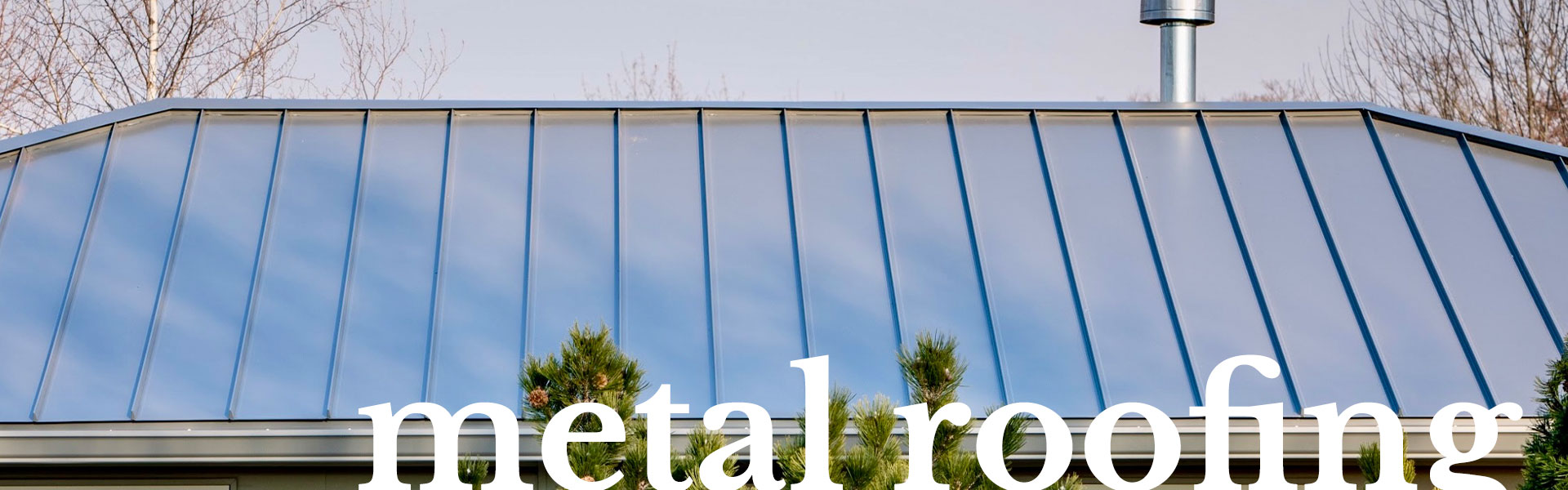
Ready to improve your home? Schedule a free consultation
Prairie Exteriors are standing seam metal roof contractors serving Madison, Sun Prairie, and South-Central Wisconsin, specializing in hidden-fastener systems built to handle the freeze-thaw cycles, heavy snow loads, and ice dam risk that define roofing in our region.
With more than 60 years of combined experience in exterior contracting, our team brings the craftsmanship and specialized equipment this type of installation demands.
Get in touch with us via our contact page to schedule your free consultation.
What Is Standing Seam Metal Roofing?
Standing seam metal roofing is a panel-based roof system where vertical panels run from the ridge of the roof down to the eave. Where two panels meet, the seam is raised — or “standing” — above the flat surface of the panel.
That raised seam is what gives this roof system its name, and it’s what sets it apart from every other metal roofing option.
Unlike exposed-fastener metal roofing, where screws are driven directly through the panel face, standing seam uses hidden fasteners concealed beneath each raised seam. The adjoining panel locks over those fasteners during installation, protecting them entirely from rain, snow, and freeze-thaw movement.
The result is a roof surface with zero exposed hardware — no screws to rust, no rubber grommets to fail, and no penetration points for water to find.
Each panel is individually formed and cut to the length of your roof, which means no seams across the panel face, minimal waste on the job site, and a cleaner, more polished appearance that works equally well on modern residential builds and high-end commercial properties.
Because fasteners are fully concealed from both view and the weather, standing seam metal roofing is the lowest-maintenance metal roof on the market — a quality that matters especially in Wisconsin, where roof problems can compound quickly once winter arrives.

💡 Additional reading: metal roofing types
How Prairie Exteriors Installs a Standing Seam Roof
Our installation process follows a specific sequence designed to create a fully watertight system from eave to ridge. Every step matters in a Wisconsin climate, where even a minor weakness can lead to ice dam damage or water intrusion before spring.
Here is how we approach each installation:
- Ice and water barrier at the eaves. Wisconsin’s Uniform Dwelling Code (SPS 321.28) requires ice dam protection extending at least 30 inches up the roof slope from the roof edge and 12 inches beyond the inner face of the exterior wall. We install self-adhering polymer-modified bitumen sheet at all eave edges and valleys before any panel work begins.
- Synthetic underlayment over the full deck. A layer of synthetic underlayment goes over the roof sheathing to provide an additional moisture barrier beneath the metal panels, covering the full deck before panels are secured.
- Valley and ridge preparation. An ice and water barrier goes into each valley — the angle where two roof sections meet — followed by valley pans with seal starter pieces that lock each vertical panel into position. A preformed ridge cap is set at the roof’s peak.
- Panel forming and installation. We use a roll forming machine on-site to form each panel to the exact length needed. A hydraulic shear cuts each panel cleanly, eliminating delays from factory-ordered panels and removing the risk of ill-fitting cuts on complex roof lines.
- Hidden fastener attachment. Clips and a screw flange secure each panel directly to the roof sheathing. The next panel locks over these fasteners, concealing them completely. The raised seams are then crimped together to form a continuous, watertight seal along every panel joint.
- Final integration. Ridge cap, valley panels, and vertical sections come together to close out the system. The finished roof has no exposed fasteners anywhere on its surface.
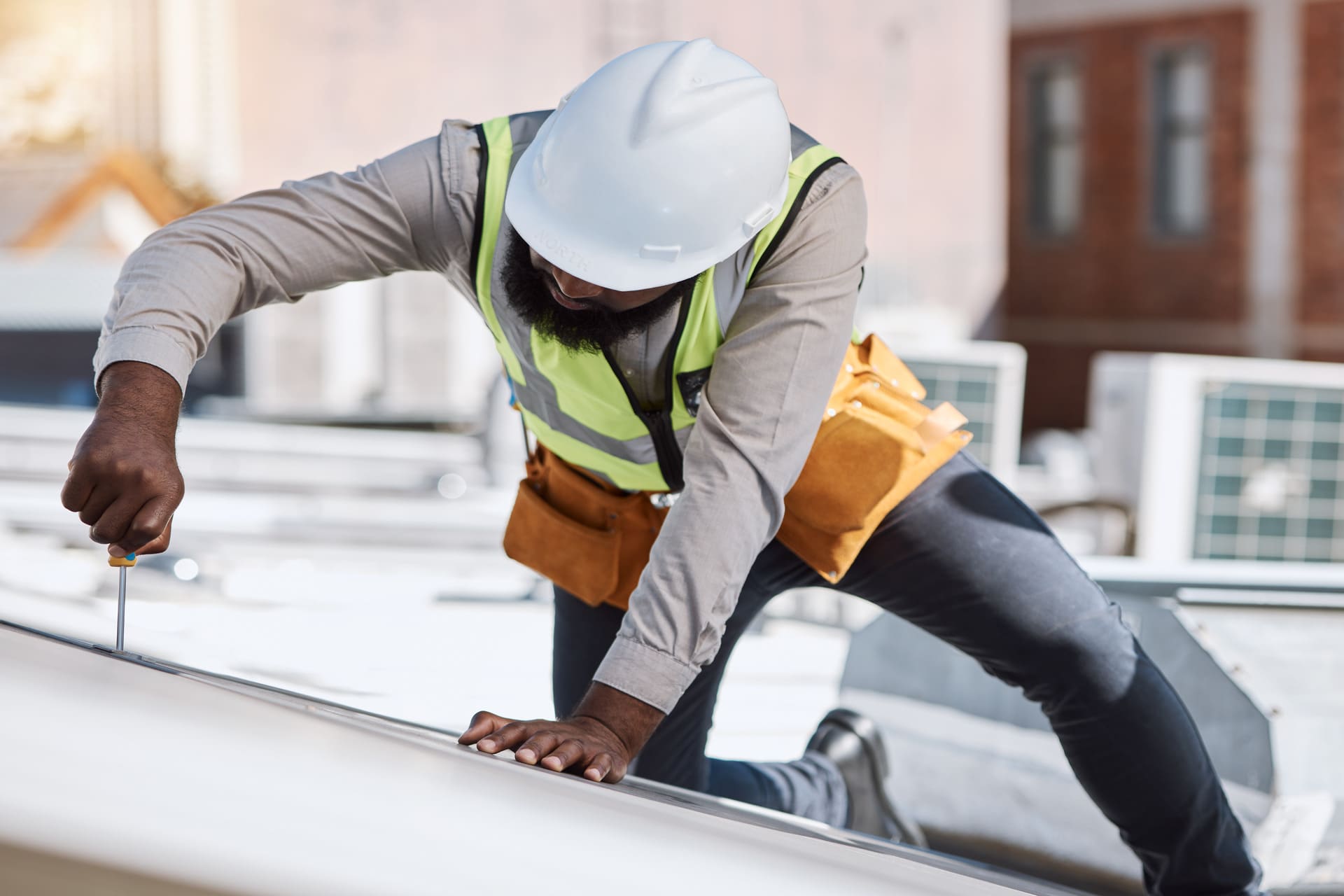
This is not a system that can be rushed or improvised. It requires trained installers, specialized equipment, and a working knowledge of how metal behaves under Wisconsin’s temperature swings. That specialty labor does factor into the overall cost, which is worth considering upfront. Our team is ready to walk you through exactly what your project involves before any work begins.
For a no-obligation walkthrough of what a standing seam installation involves for your home, contact us today.
Why Standing Seam Performs Better in Wisconsin’s Climate
According to the Wisconsin State Climatology Office, Madison averages 51.8 inches of snowfall per year based on the 1991–2020 climate normals. South-Central Wisconsin winters typically run from December through March, with January lows averaging around 10°F and temperatures cycling above and below freezing throughout the season — sometimes multiple times in a single week.
That freeze-thaw cycle is the real enemy of most roofing systems. When snow melts during a warmer afternoon and refreezes at night, it works its way under shingles, expands in cracks, and causes serious damage to both the roof covering and the deck beneath over time.
Standing seam handles Wisconsin’s winters better than any other residential roofing product for several reasons:
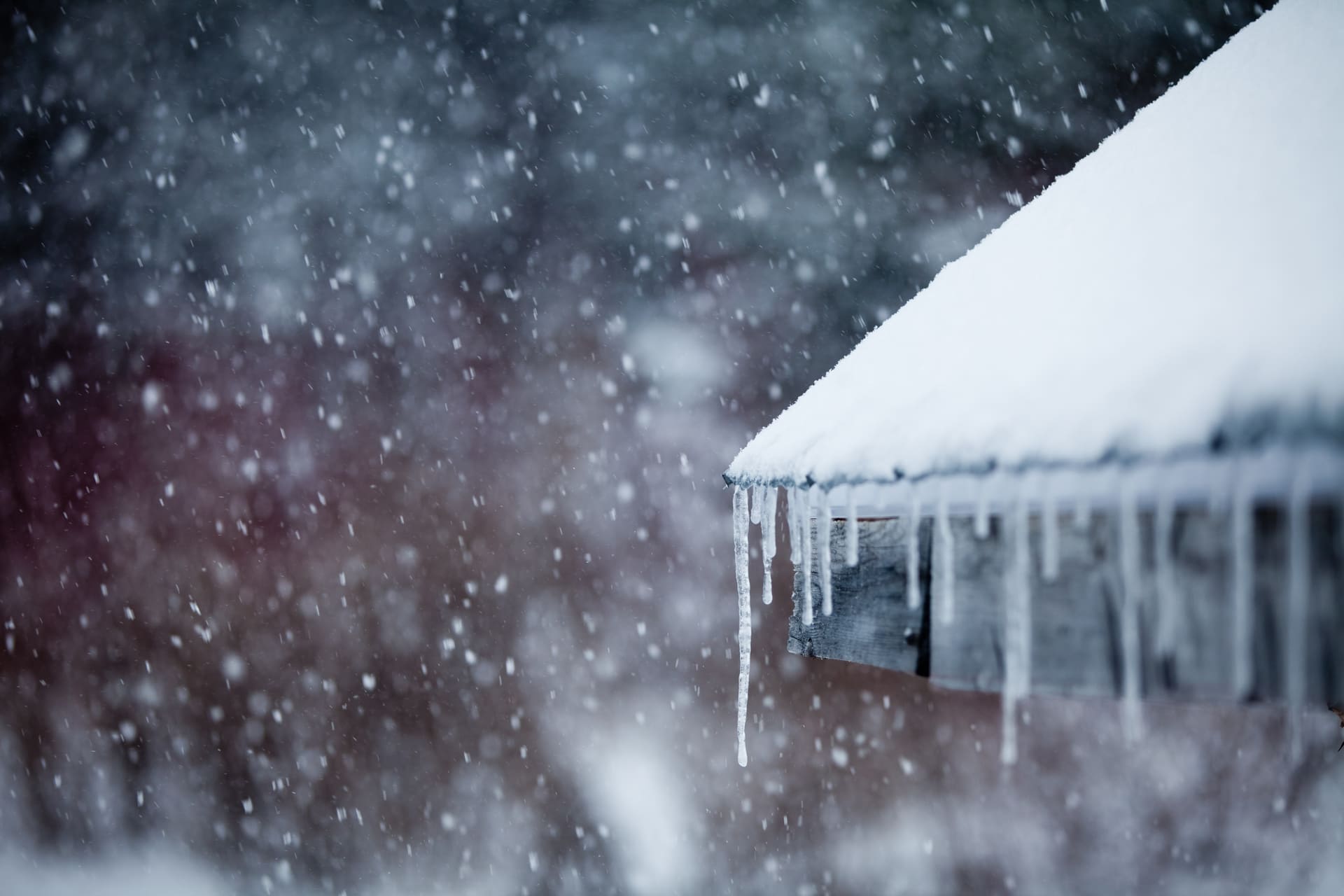
- No exposed fasteners means no freeze-thaw entry points. With traditional roofing, screws and nails driven through the panel face create small penetration points. When water seeps in and freezes, it expands those points season after season. Standing seam eliminates those points entirely.
- Panels allow for thermal expansion without stress. Metal expands and contracts with temperature changes. The hidden clip system allows each panel to move slightly without pulling at fasteners or cracking sealants — a critical feature for Wisconsin’s wide temperature range.
- Smooth panels shed snow naturally. The low-friction surface of standing seam panels, combined with their vertical orientation, allows heavy snow loads to slide rather than accumulate. This is especially valuable given Wisconsin’s snow load requirements under SPS 321.02, which mandate that roofs be designed to support the minimum loads outlined in the state’s zone map.
- Hidden fasteners are protected from corrosion. In Wisconsin’s environment, moisture exposure is constant from October through April. Fasteners that are never exposed to that moisture simply last longer.
We help homeowners across the Madison area weigh these performance factors against their specific roof, budget, and timeline — so the decision they make is the right one for their home.
💡 Additional reading: metal roof repair services in Wisconsin
HIGH-QUALITY
ROOF REPLACEMENT
YOU CAN RELY ON
Choose Prairie Exteriors for durable, dependable metal roofing solutions designed to stand the test of time.

Client Reviews
Based on 150+ Google Reviews
-

David Lory
1 review3 months ago
We had siding and roof replaced due to hail damage. they were excellent from the first contact to the final walk through. Prices were fair, the teams that did the work were competent and respectful and worked to get things done in a timely manner. very impressed with this company.
-

Hal Bergan
1 reviews5 months ago
We were very pleased with the performance of Prairie Exteriors on our siding project. Their work was timely and their crew highly professional. Luis Madrigal did an outstanding job leading the project and keeping us up to date on Prairie’s progress. We would look to the company again for any subsequent exterior projects.
-

Daniel Schmoldt
16 reviewsa month ago
Very price competitive, even without the optional cash discount. Everyone that we were in contact with was prompt, courteous, and professional. Our deck replacement was completed on time and with excellent results.
Standing Seam vs. Exposed Fastener Metal Roofing
Not all metal roofs are the same. The most common comparison Wisconsin homeowners face is between standing seam and exposed fastener metal roofing. Both are metal, but they perform very differently over time — especially here in South-Central Wisconsin.
| Feature | Standing Seam | Exposed Fastener Metal |
| Fastener exposure | None — fully concealed | Screws visible across panel face |
| Freeze-thaw performance | Excellent | Moderate — fasteners vulnerable to cycling |
| Expected lifespan | 40–70 years | 15–25 years |
| Maintenance requirements | Minimal | Ongoing — fasteners need periodic checking |
| Ideal application | Residential, commercial, high-end builds | Agricultural, outbuildings, budget projects |
| Upfront cost | Higher | Lower |
For residential roofing over heated living spaces in Wisconsin, standing seam is the stronger long-term investment. Exposed fastener metal is not recommended for applications over conditioned spaces — the fastener penetrations, however small, are points where water and air can eventually infiltrate after repeated freeze-thaw cycles work on those seals over the years.
If you’re weighing these two systems and aren’t sure which fits your project, our team can give you an honest assessment based on your roof’s specific conditions.

Standing Seam vs. Asphalt Shingles: The Long-Term Picture
Standing seam metal roofing costs more than asphalt shingles upfront — typically two to three times more per square foot. That gap narrows significantly when you account for the full lifecycle of each system.
Asphalt shingles in Wisconsin’s climate typically need replacement every 20 to 30 years. A standing seam roof installed today can reasonably serve the same home for 40 to 70 years with minimal maintenance. A Wisconsin homeowner who chooses asphalt shingles today will likely face at least one full reroof during the same period their standing seam roof is still on its original installation.
Beyond replacement frequency, there are other long-term factors worth considering:
- Energy costs. Metal roofing reflects solar heat rather than absorbing it, which reduces cooling loads in summer. Wisconsin summers push into the mid-80s, making this a real benefit.
- Insurance considerations. Metal roofing’s resistance to fire and impact damage may qualify some homeowners for reduced premiums. This varies by insurer and policy.
- Home resale. A standing seam roof communicates quality to prospective buyers and adds measurable value, particularly in higher-end Madison-area neighborhoods where buyers are weighing long-term ownership costs.
At Prairie Exteriors, we help homeowners work through both sides of this equation — the upfront investment and the long-term return — before any decision is made. We only install products we’d put on our own homes, and we’ll tell you honestly if a different system serves your situation better.
To talk through which system fits your home, reach out to our team via our contact page.
What Homes and Buildings Are Good Candidates for Standing Seam?
Standing seam is a specialty product, and it’s not the right fit for every project. Here is a straightforward look at where it performs best and where alternatives may make more sense.
Strong candidates for standing seam include:
- Residential homes where the owners plan to stay long-term and want to eliminate recurring roof replacement costs
- Higher-end residential builds where the clean, uninterrupted look of hidden-fastener metal panels complements the architecture
- Commercial and light commercial buildings where maintenance costs are a priority concern
- Properties with known ice dam problems — particularly homes with lower-slope sections or complex roof lines that trap snow
- New construction where the roofing system is being designed from the start
Projects where other options may be worth considering include:
- Budget-constrained projects where the initial cost of standing seam is not feasible — in these cases, architectural asphalt shingles remain a solid choice with the right installation
- Agricultural outbuildings and structures where exposed fastener metal is cost-appropriate
- Homeowners with a shorter time horizon who may not remain in the property long enough to recapture the investment
We work with homeowners across South-Central Wisconsin to identify the right system for their specific situation — and if standing seam isn’t the best fit, we’ll say so.
When you’re ready to move forward, our Madison, WI standing seam metal roof contractors page has more detail on what we offer locally.
Wisconsin Code Requirements for Metal Roofing
Standing seam metal roofing installations in Wisconsin must meet the requirements of the Wisconsin Uniform Dwelling Code, administered by the Wisconsin Department of Safety and Professional Services. Key requirements relevant to standing seam installations include:
- Minimum slope. Many standing seam systems are rated for a minimum slope of ¼:12, though exact requirements depend on manufacturer specifications and system type.
- Ice dam protection. In areas of Wisconsin where ice dams are possible, an ice barrier membrane must be installed at the eaves. The barrier must extend from the roof edge to at least 24 inches inside the exterior wall line of the building, using a self-adhering polymer-modified bitumen sheet or equivalent material at eaves and valleys..
- Reroofing restrictions. New roof coverings cannot be installed over existing materials that are water-soaked, deteriorated, or where two or more layers of roofing already exist — making a full tear-off the right starting point for most standing seam installations.
- Underlayment. Metal panels must be applied to a solid or closely fitted deck, with underlayment installed over the sheathing prior to panel installation.
- Snow load design. Per SPS 321.02, Wisconsin roofs must be designed and constructed to support the minimum snow loads listed on the state’s zone map.
Prairie Exteriors manages the permitting process as part of every project. We pull the required permits, coordinate inspections, and ensure the finished installation meets all applicable local and state code requirements — so you don’t have to navigate that process alone.
Ready to Put Wisconsin’s Toughest Roof on Your Home?
Prairie Exteriors has served Madison, Sun Prairie, and South-Central Wisconsin for decades, and we’ve built that track record by doing things the right way.
Our division managers, project managers, and owners are all working construction professionals. When we sit down with you to talk through a standing seam project, the person across the table knows how these systems are built, how they perform in Wisconsin winters, and what it takes to get the installation right the first time.
We only offer products that provide a real return on investment — products we’d put in our own homes. That means 24-gauge commercial-grade steel panels, proper ice and water barrier at every eave and valley, and on-site roll forming that custom-fits every panel to your roof.

Call us at +1 608-370-2528 or visit our contact page to schedule your free consultation.
Frequently Asked Questions
How long does a standing seam metal roof installation take in Wisconsin?
Most residential standing seam installations in Wisconsin take two to five days, depending on roof size, complexity, and weather conditions. Because our panels are roll-formed on-site, there is no waiting on factory-cut deliveries. Our crew arrives with forming equipment ready to go, which keeps the project moving efficiently from the first day on-site.
Does homeowner's insurance in Wisconsin cover a standing seam roof after storm damage?
Most standard Wisconsin homeowner’s policies cover sudden storm damage — including wind and hail — but exclude damage caused by wear, age, or deferred maintenance. Coverage ultimately depends on your specific policy and your insurer’s assessment. Metal roofing’s resistance to impact and wind uplift can work in your favor during a claim. We document existing conditions and damage thoroughly to support your claim process wherever we can.
Do Madison-area homes need snow guards on a standing seam metal roof?
Snow guards are worth serious consideration on Wisconsin standing seam roofs, particularly on steep-pitch sections or where the eave overhangs a doorway, walkway, driveway, or lower roof section. The smooth panel surface sheds snow effectively — an advantage for load management, but one that means large volumes can release suddenly. Whether snow retention is needed depends on slope, orientation, and what sits below the eave line, and we assess this as part of every project consultation.
Can standing seam metal roofing be installed on a low-slope roof in South-Central Wisconsin?
Yes — the Wisconsin Building Code permits standing seam metal panel systems on slopes as low as one-quarter unit vertical per 12 units horizontal, far lower than most other roofing materials allow. This makes it one of the few appropriate options for low-slope residential sections prone to snow accumulation and ice dam formation. Proper underlayment and ice barrier installation become even more critical at lower slopes, and our team accounts for this on every low-slope project.
How much does a standing seam metal roof cost compared to asphalt shingles in Wisconsin?
Standing seam metal roofing typically costs two to three times more per square foot than asphalt shingles upfront. For a standard Wisconsin home, that represents a meaningfully higher initial investment. However, with a lifespan of 40 to 70 years versus 20 to 30 years for asphalt, most homeowners who stay in their property long-term find the lifecycle cost comparison closer than it first appears. Prairie Exteriors provides detailed, project-specific estimates so you can evaluate the real numbers for your home.