
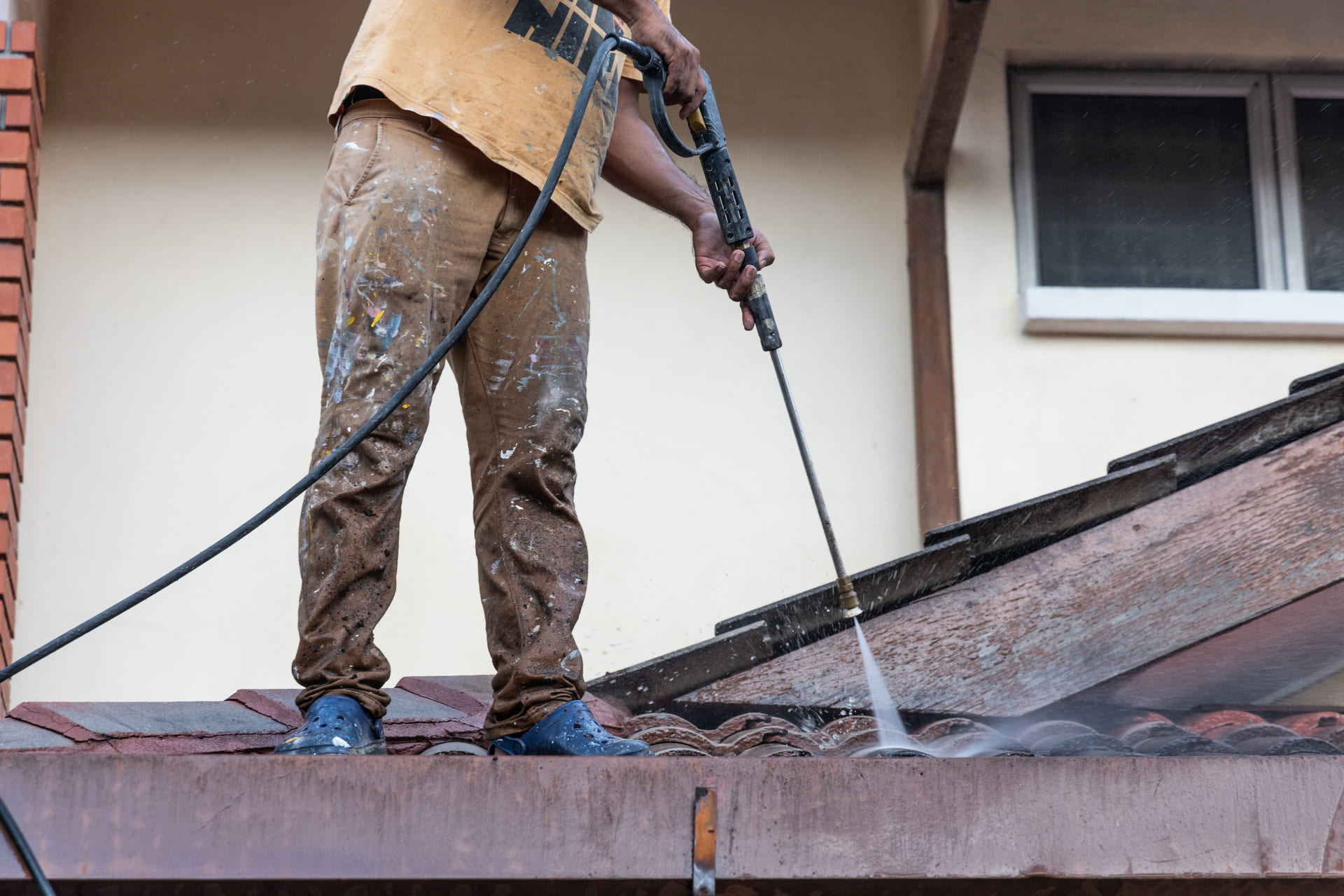
You should not pressure wash roof shingles in Wisconsin. At Prairie Exteriors, we get asked about this regularly — and the answer is always the same: high-pressure washing strips away the granule layer that protects asphalt shingles, voids manufacturer warranties, and in Wisconsin’s freeze-thaw climate, sets your roof up for a much shorter lifespan than it should have.
If you’re concerned about the condition of your roof, learn more about our shingle roof installation in Wisconsin.

Why pressure washing roof shingles is a bad idea
Pressure washing asphalt shingles strips away the protective granule layer that shields your roof from UV rays, moisture, and physical wear. Once those granules are gone, the damage compounds quickly — and in Wisconsin’s climate, that process accelerates in ways homeowners often don’t anticipate until it’s too late.
High-pressure water forces its way under shingles, breaking the seal between layers and creating entry points for water. It can also lift shingle tabs, crack brittle shingles, and leave your roof structurally weaker heading into the season that tests it hardest.
Manufacturer warranties make this even more consequential. Leading shingle brands — including Owens Corning, GAF, and CertainTeed — generally require cleaning methods that do not damage the shingle surface, and damage caused by high-pressure washing may not be covered. Homeowners should review their specific warranty terms before allowing any high-pressure cleaning.
How Wisconsin’s climate makes pressure washing even riskier

Wisconsin homeowners face a roofing environment that most national guides don’t account for. Madison averages 51.8 inches of snow per year, according to the Wisconsin State Climatology Office, and the state’s climate produces repeated freeze-thaw cycles throughout the season. Research from the Great Lakes Integrated Sciences and Assessments program at the University of Michigan documents an average of around 42 freeze-thaw cycles per year across the Great Lakes region.
Each one of those cycles puts mechanical stress on your shingles — and that stress multiplies significantly when granules have been stripped away.
Granules don’t just protect against UV damage. They also add a layer of thermal mass that helps regulate the temperature at the shingle surface. When granules are depleted, shingles heat and cool more dramatically with each cycle, accelerating cracking and curling.
Ice dams add another layer of risk specific to Wisconsin. They form when heat escapes through your roof, melts snow near the ridge, and that meltwater refreezes at the colder eaves. When shingles are compromised from pressure washing, water that backs up behind an ice dam has a much easier time finding its way under the shingle layer and into your home.
We help Madison and Sun Prairie homeowners assess this kind of combined risk before it becomes an expensive repair.
Not sure where to start? Contact us and we'll help you figure out the right next step for your roof.
What grows on Wisconsin roofs — and why it matters
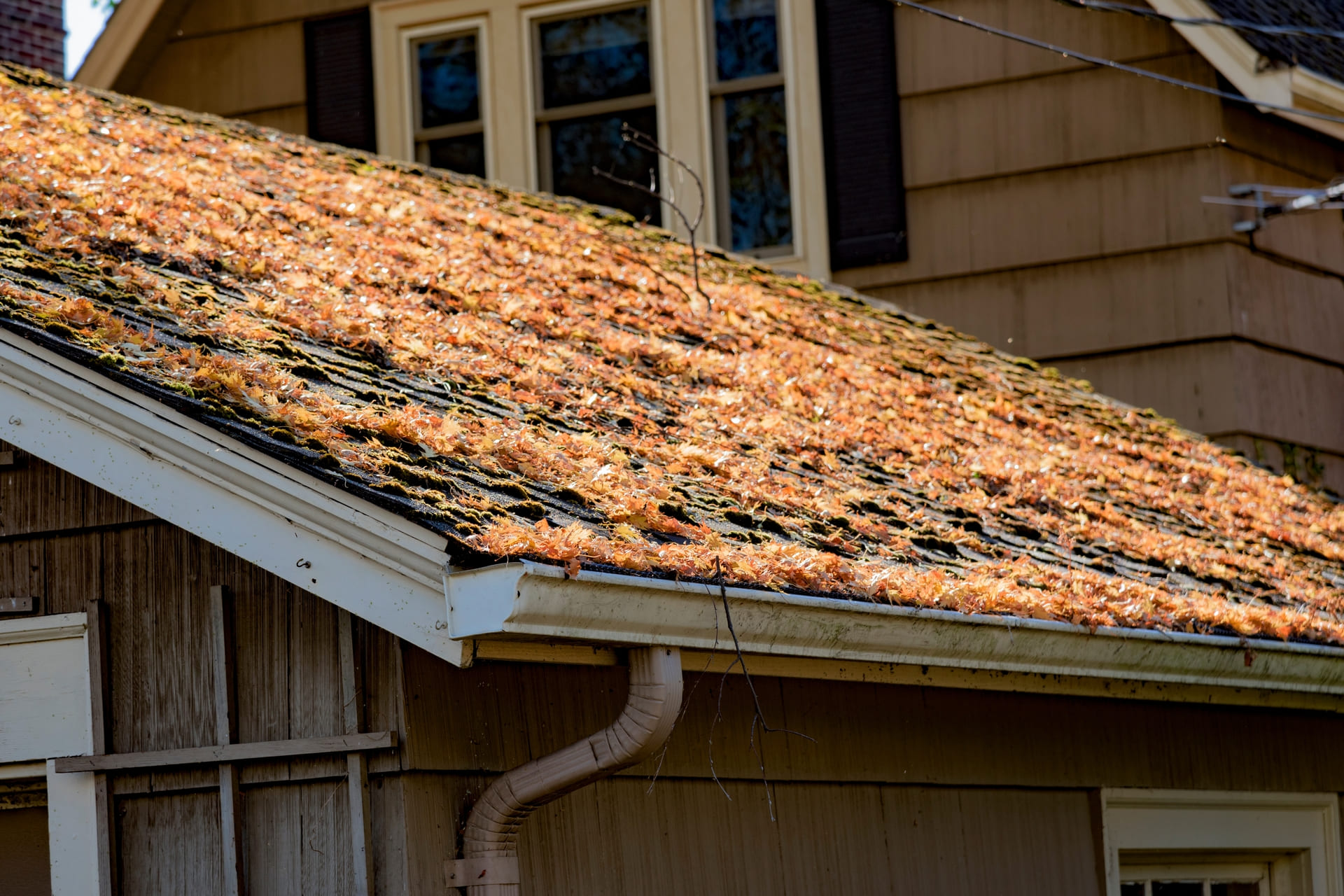
Those black streaks on your roof aren’t dirt. They’re almost always Gloeocapsa magma, a cyanobacterium that thrives in humid conditions and feeds on the limestone filler in asphalt shingles. Moss and lichen are also common in Wisconsin, particularly on north-facing slopes that stay damp longer after rain or snowmelt.
Each of these organisms causes a different type of damage:
- Algae (Gloeocapsa magma): Stains shingles black and breaks down the limestone granule binder over time, accelerating granule loss even before any cleaning is attempted.
- Moss: Grows roots that physically lift and separate shingle tabs, creating gaps where water and ice can penetrate.
- Lichen: The most aggressive of the three. Lichen embeds itself into the shingle surface and can pull away granules when removed, making it especially destructive on older roofs.
Identifying what’s growing on your roof is the first step toward the right solution. We can assess the type and extent of biological growth during an inspection and recommend whether repair or replacement is the more practical investment.
💡 Additional reading: how to clean roof shingles
YOUR TRUSTED PARTNER FOR ROOF REPLACEMENT
Upgrade to a durable asphalt roof with help from Prairie Exteriors. Built to protect your home.
The safe alternative: soft washing explained
Some exterior cleaning companies promote a process called soft washing, which uses low-pressure water combined with cleaning solutions to remove biological growth.
While this method avoids the mechanical damage caused by pressure washing, it is still a cleaning service rather than a roofing service.
Prairie Exteriors does not provide roof washing services and does not recommend washing asphalt shingles as a routine maintenance practice.
Cleaning methods used on asphalt roofs
Some contractors attempt to clean roof algae or moss using different washing techniques. The two most commonly referenced methods are pressure washing and soft washing.
| Method | How it works | Risks |
| Pressure washing | High-pressure water removes debris | Can strip granules and void warranties |
| Soft washing | Low-pressure water with cleaning solution | May still disturb aging shingles and introduces chemical runoff |
Prairie Exteriors focuses on roof repair and replacement rather than roof washing services.
Situations where homeowners sometimes consider roof cleaning
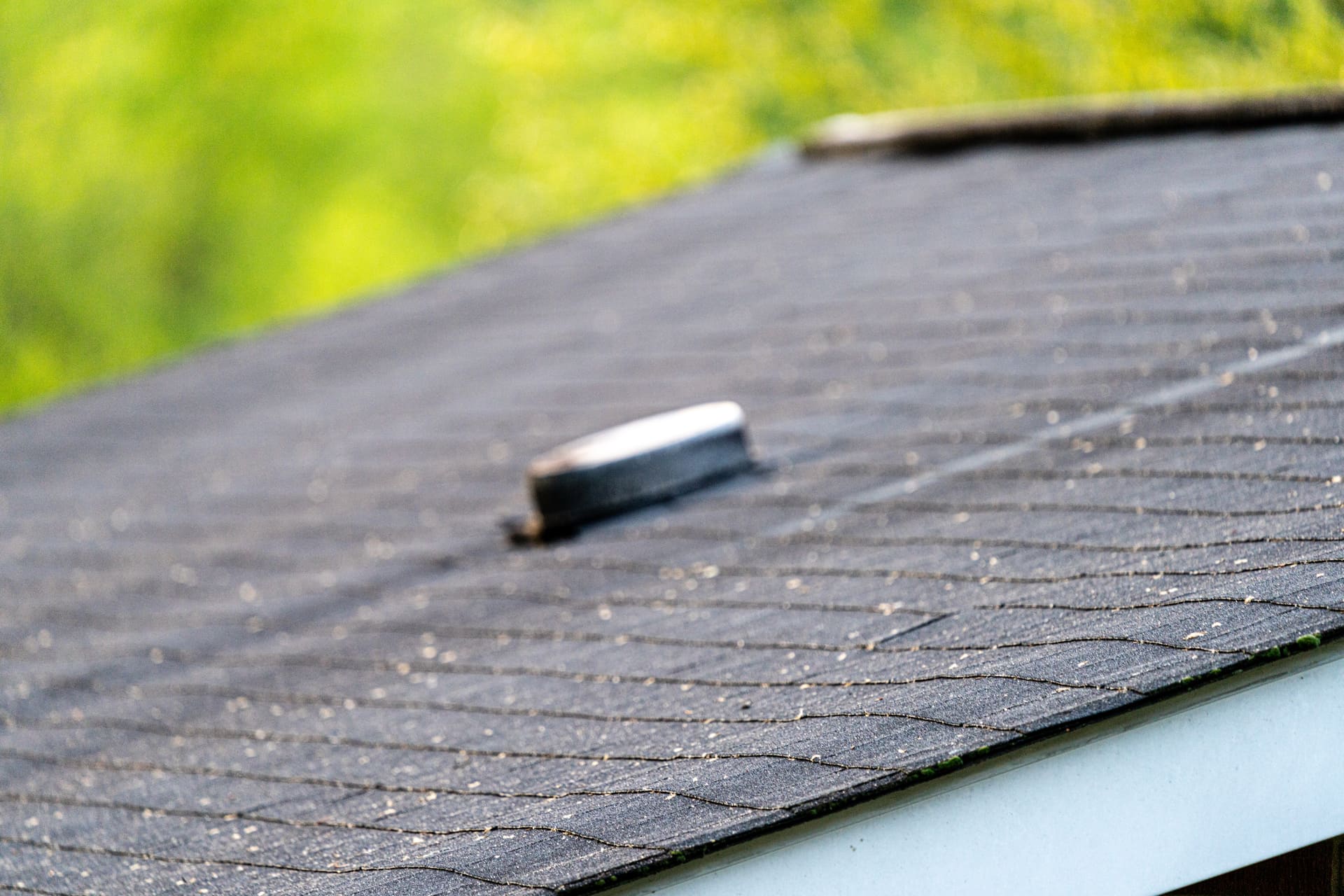
Cleaning is only worth the investment if your shingles have enough service life left to justify it. A roof that’s heavily granule-depleted, has widespread curling or cupping, or shows cracking and brittleness is a candidate for replacement — not a wash.
In some situations, homeowners explore roof cleaning options instead of replacement:
- Visible algae streaking or moss patches, but shingles are otherwise flat and intact
- Granules still present and consistent (check your gutters — granule accumulation there signals depletion)
- Roof is less than 15 years old and within its expected service life
- No active leaks or water intrusion issues
Signs your roof may need replacement instead:
- Widespread granule loss visible from the ground or in gutters
- Shingles curling, cupping, or cracking
- Roof age approaching or beyond 20–25 years for standard 3-tab, or 25–30 years for architectural shingles
- Multiple areas of lifted or missing tabs
The line between “worth cleaning” and “worth replacing” isn’t always obvious from the ground. At Prairie Exteriors, we give South-Central Wisconsin homeowners a straight answer — and we only recommend what we’d put on our own homes.
💡 Additional reading: how to repair roof shingles
What Wisconsin homeowners should do instead of pressure washing
If your roof has biological growth that needs addressing, here’s a practical path forward:
- Get a professional roof assessment first. Before any cleaning, have a qualified contractor evaluate the condition of your shingles to determine whether cleaning is appropriate or whether you’re masking underlying issues.
- Understand the cleaning method being proposed. Some contractors use low-pressure chemical cleaning methods called “soft washing,” while others use pressure washing. Homeowners should understand the risks of both approaches before agreeing to any roof cleaning.
- Address moss and lichen proactively. In Wisconsin’s climate, north-facing slopes and areas with significant tree coverage are especially prone to growth. Zinc or copper strip treatments installed near the ridge can inhibit regrowth after cleaning without requiring repeated applications.
- Pair roof cleaning with gutter maintenance. Organic debris in gutters fuels the moisture conditions that promote algae and moss. Cleaning your gutters before or after a soft wash removes that growth medium and extends the results.
- Time the cleaning correctly. Late spring through early fall is the practical window in Wisconsin. The cleaning solution needs several days of dry weather to work effectively, and you want to avoid applying it when overnight freezing could interrupt the process.
UPGRADE YOUR ROOF WITH CONFIDENCE
Protect your home with durable, high-quality roofing from Prairie Exteriors. Trusted and reliable solutions.
How much does roof cleaning cost in Wisconsin?
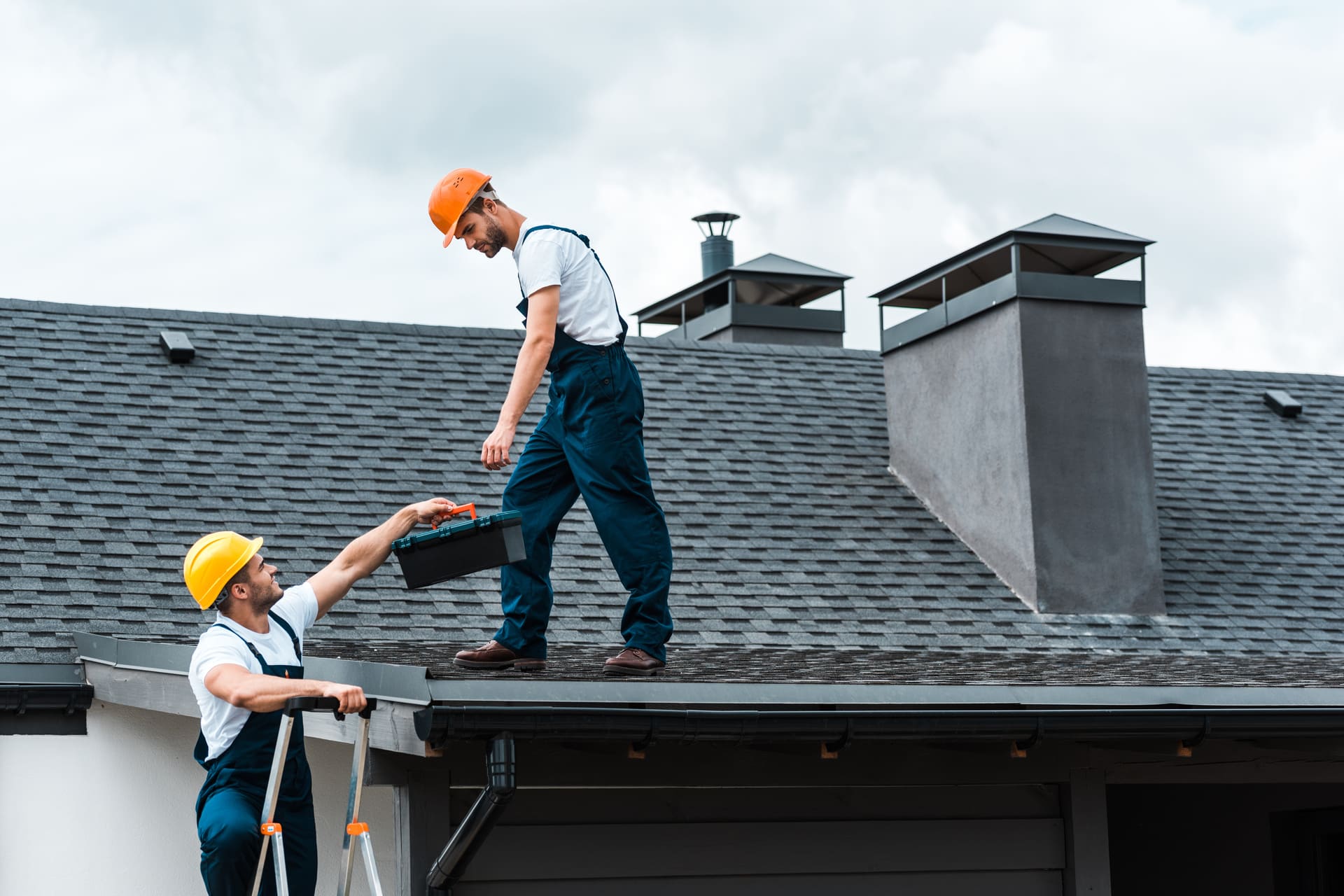
Soft wash roof cleaning in Wisconsin typically costs hundreds of dollars for an average home, with larger or steeper roofs running higher. Pricing varies based on roof size, pitch and accessibility, the extent of biological growth, and whether services like gutter cleaning are included.
That investment compares favorably to the cost of premature roof replacement, which can run into the thousands of dollars depending on the size and materials of the home. If soft washing extends a roof’s functional life by even a few years, the long-term value becomes clear.
Prairie Exteriors does not provide roof washing services and instead focuses on diagnosing when repair or replacement is the better long-term solution.
💡 Additional reading: extending a roof lifespan
Let us take the guesswork out of roof care
Some roofs can continue functioning with minor maintenance. Others require repair or full replacement. A few need both — in the right order. What every Wisconsin roof needs is someone willing to look at it and tell you the truth, even when the answer costs less than you expected to spend.
With more than 60 years of combined experience serving Madison, Sun Prairie, and South-Central Wisconsin, Prairie Exteriors is here to guide you to the right decision — not just the next job. We only recommend what we’d put on our own homes, and we’ll tell you plainly when cleaning is worth it and when it isn’t.
Call us at +1 608-370-2528 or visit our contact page to schedule a no-pressure assessment of your roof.
FAQs
Will pressure washing my roof void my shingle warranty in Wisconsin?
Yes, in most cases it will. Manufacturers, including Owens Corning, GAF, and CertainTeed, include specific language in their warranty terms prohibiting high-pressure washing. If a warranty claim is filed after pressure washing has been performed, the manufacturer can deny it on those grounds. Having a contractor review your warranty terms before any cleaning is the safest approach.
How do I know if the black streaks on my Wisconsin roof are algae, and do they cause actual damage?
Black streaking is almost always Gloeocapsa magma, a cyanobacterium that feeds on the limestone filler in asphalt shingles. Beyond staining, it actively degrades the granule binder over time, accelerating shingle wear. In Wisconsin’s humid summers, it spreads quickly — and left untreated, the granule loss it causes makes your roof significantly more vulnerable heading into winter.
How long do roof cleaning treatments typically last?
A professionally applied soft wash treatment typically lasts three to five years, because the cleaning solution kills biological growth at the root rather than simply rinsing the surface. Longevity depends on factors like tree coverage, roof orientation, and slope. North-facing sections that retain moisture longer tend to see regrowth sooner than south-facing ones.
Is it safe to walk on my roof during or after soft washing in Wisconsin?
Roofs treated with soft wash solution can be slippery during and immediately after application, and should only be accessed by trained contractors with appropriate safety equipment. For homeowners, walking on a wet or recently treated roof is not recommended, regardless of pitch. Once the roof is fully dry — typically after 24 to 48 hour,s depending on conditions — it is safe for routine inspections.
What happens if I delay cleaning moss or lichen off my Wisconsin roof for another season?
Delaying removal for one additional season significantly increases the risk of structural damage. Moss roots continue to lift and separate shingle tabs with each freeze-thaw cycle, widening the gaps where ice and water can penetrate. Lichen bonds more deeply to the shingle surface over time, meaning removal becomes more aggressive — and more likely to pull away granules — the longer it is left untreated.